


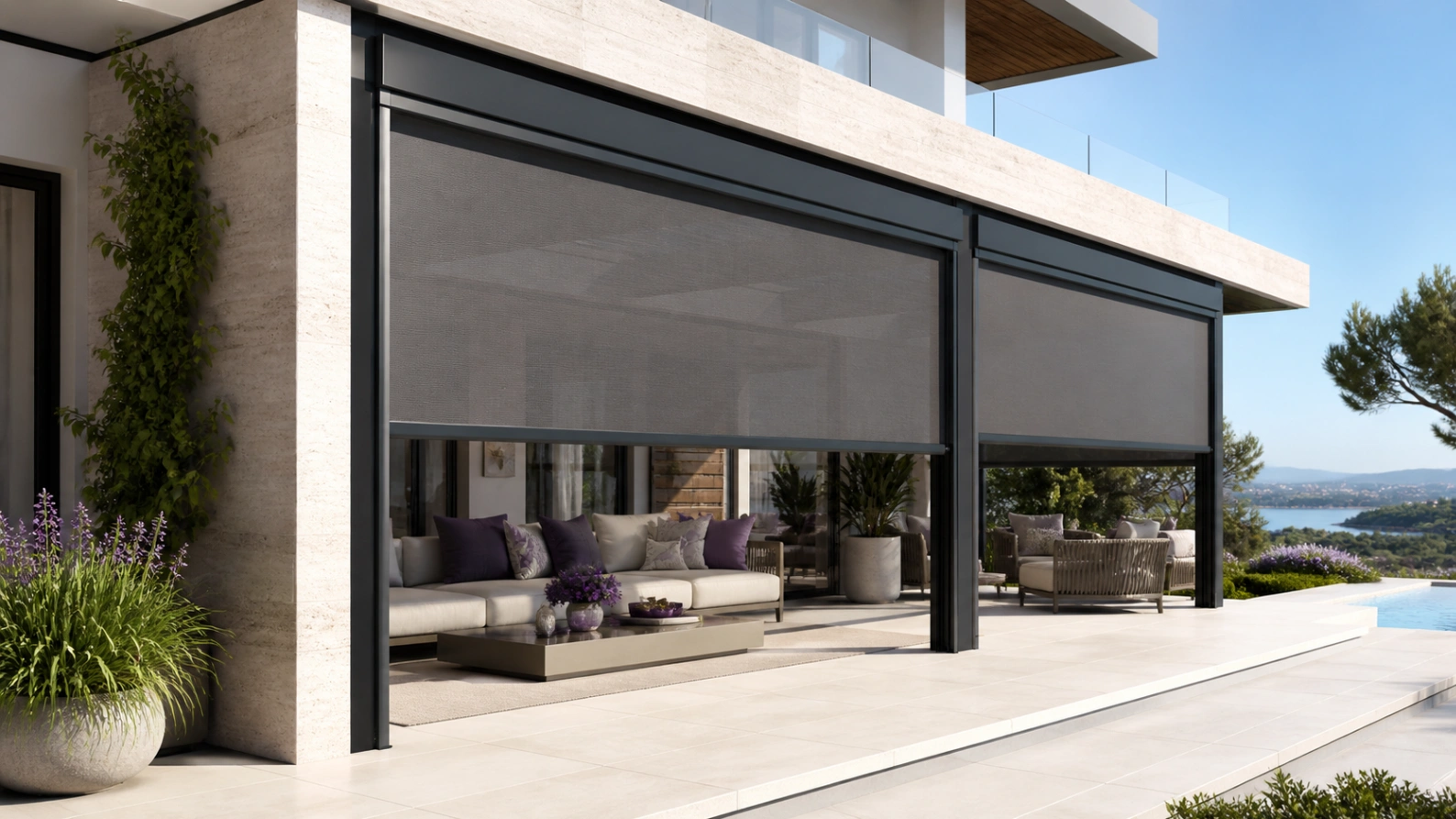
Zip Screen Systems: Modern Sun Protection for Balconies, Terraces and Facades
Discover how zip screen systems provide effective sun protection, privacy, wind resistance, and a clean architectural look for balconies, terraces, pergolas, and facades.
Zip Screen Systems: Modern Sun Protection for Balconies, Terraces and Facades
Modern outdoor spaces are no longer used only as seasonal areas. Balconies, terraces, pergolas and glass façades are now part of daily living, hospitality projects and commercial architecture. Zip screen systems help make these spaces more comfortable by providing sun protection, privacy, wind stability and a clean architectural appearance.
A zip screen is a vertical outdoor shading system where the fabric moves inside side guide channels. This structure helps the fabric stay more controlled compared to traditional outdoor blinds, especially in balcony, terrace, pergola and façade applications.
What Is a Zip Screen System?
A zip screen system is designed to cover vertical openings with a guided fabric structure. It usually includes an aluminum cassette, side guide profiles, technical fabric, bottom bar and a manual or motorized operating mechanism. The fabric moves up and down inside the side channels, helping reduce side gaps and creating a cleaner finish.
This makes zip screen systems a strong solution for modern buildings where sun exposure, privacy and outdoor comfort need to be managed without fully closing the space.
Why Zip Screens Are Used in Modern Architecture
Large glass surfaces and open outdoor areas create a bright and premium feeling, but they also bring sunlight, heat, glare and privacy challenges. Zip screens help control these factors while preserving the architectural look of the building.
For homeowners, this means a more usable balcony or terrace. For architects, dealers, installers and project companies, it means a high-value shading system that can be adapted to different residential and commercial projects.
Sun Protection and Heat Control
One of the main reasons to choose a zip screen system is sun protection. Depending on the selected fabric, zip screens can help reduce direct sunlight, glare and heat gain. This makes balconies, terraces and pergolas more comfortable during sunny hours.
When installed in front of large glass surfaces, zip screens can also support indoor comfort by reducing excessive sunlight before it reaches the interior. For this reason, they are commonly preferred in villas, apartments, hotels, restaurants and commercial buildings.
Privacy Without Closing the Space
Zip screens can improve privacy while keeping the outdoor area visually connected to its surroundings. This is especially valuable for city balconies, garden-level homes, restaurant terraces and hotel projects where users want privacy without creating a heavy enclosed feeling.
The right fabric selection is important. Screen fabrics can provide sun control while maintaining a certain level of visibility, while blackout or denser fabrics can offer stronger privacy and light control.
Wind Stability and Side-Channel Guidance
The side-channel structure is one of the most important features of a zip screen system. Since the fabric is guided inside the side profiles, it stays more controlled than loose outdoor curtain systems.
Wind exposure, system size, installation quality and fabric type should always be evaluated correctly. However, in suitable applications, zip-guided systems offer stronger fabric stability and a cleaner appearance for outdoor shading projects.
Where Can Zip Screen Systems Be Used?
- Balconies and apartment terraces
- Pergolas and verandas
- Winter gardens
- Restaurant and café outdoor areas
- Hotels and hospitality projects
- Villa terraces and garden seating areas
- Large glass façades
- Commercial buildings and project applications
Benefits for Homeowners
For homeowners, zip screen systems create a more comfortable outdoor lifestyle. They help reduce harsh sunlight, improve privacy and make balconies or terraces more usable throughout the day.
A motorized zip screen can also add daily convenience. With remote control or compatible automation options, users can adjust the system easily without manual effort. This is especially useful for wide openings, pergolas and premium residential projects.
Benefits for Dealers, Installers and Project Companies
Zip screen systems are a high-value product category for B2B partners. Dealers, installers, architects, façade companies and construction firms can offer zip screens in residential, hospitality and commercial projects where modern outdoor shading is required.
For companies comparing flyscreen, blind and outdoor shading solutions, Sineset zip screen systems provide a strong category for balcony, terrace, pergola and façade applications.
Zip Screen vs Traditional Outdoor Blind
| Feature | Zip Screen System | Traditional Outdoor Blind |
|---|---|---|
| Fabric movement | Guided inside side channels | May move more freely depending on system type |
| Sun protection | Strong with the right technical fabric | Varies by fabric and structure |
| Visual appearance | Clean, modern and architectural | Can look more basic or decorative |
| Best use | Balconies, terraces, pergolas and façades | Basic outdoor shading areas |
| B2B project value | Premium outdoor shading solution | Usually more standard shading solution |
How to Choose the Right Zip Screen System
Before choosing a zip screen system, the project details should be reviewed carefully. Opening size, wind exposure, installation surface, fabric selection, motor preference and control options all affect the final performance.
- For balconies: Focus on privacy, compact installation and sun control.
- For terraces: Evaluate opening size, wind exposure and fabric choice.
- For pergolas: Prioritize fabric stability, side-channel guidance and motorized operation.
- For façades: Consider heat control, glare reduction and architectural appearance.
- For B2B projects: Check measurement flexibility, production support and system compatibility.
If you are planning a balcony, terrace, pergola or façade project, you can review Sineset’s references and project applications to see how shading systems support different architectural spaces.
Frequently Asked Questions
What is a zip screen system?
A zip screen system is a vertical outdoor shading solution where the fabric moves inside side guide channels. It is used for sun protection, privacy and improved fabric stability in balconies, terraces, pergolas and façades.
Can zip screens be used on balconies?
Yes. Zip screens are suitable for balcony applications when the structure, dimensions and installation details are compatible with the system.
Are zip screens suitable for terraces and pergolas?
Yes. Zip screen systems are widely used for terraces and pergolas because they help control sunlight, privacy and outdoor comfort.
Do zip screens provide privacy?
Yes. Depending on the selected fabric, zip screens can improve privacy while still allowing the outdoor area to feel open and comfortable.
Are zip screens suitable for B2B projects?
Yes. Zip screens are suitable for dealers, installers, architects, construction companies and project firms because they can be adapted to different outdoor shading applications.
Final Recommendation
Zip screen systems are one of the most effective modern shading solutions for balconies, terraces, pergolas and façades. They combine sun protection, privacy, fabric stability and architectural aesthetics in one system.
To compare suitable outdoor shading solutions for your home or project, explore Sineset zip screen systems or contact Sineset for project-based support.
