


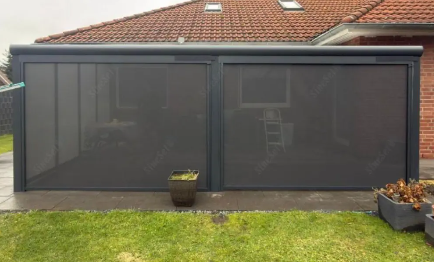
Zip Screen Motor and Automation Options: Control Planning for Vertical and Roof Shading Systems
Discover motor and automation options for zip screen systems, including tube motors, remote control, wall switch, smart home control and project-based motor planning.
Zip Screen Motor and Automation Options: Control Planning for Vertical and Roof Shading Systems
Motor and automation planning is one of the most important parts of a zip screen system. A well-selected motor improves daily use, supports smooth movement and helps the system work more comfortably in balconies, terraces, pergolas, glass roofs, winter gardens and commercial outdoor areas.
Zip screens are not only fabric and aluminium profiles. The motor, control method, electrical preparation, motor side, fabric size and project structure all affect the final user experience. For dealers, installers, architects and project buyers, motor planning should be evaluated before production.
Why Motor Planning Matters in Zip Screen Systems
A zip screen system works with a cassette, side guide profiles, fabric, bottom profile and motorized movement. If the motor is not selected correctly, the system may not deliver the expected comfort or operational performance.
Motor planning should consider the opening size, fabric weight, installation area, daily usage frequency, control preference and project conditions. This is especially important for large vertical zip screens and roof shading systems.
Where Are Motorized Zip Screens Used?
Motorized zip screens can be used in different vertical and roof applications. The correct motor and control option should be selected according to the application type.
| Application Area | Motor Planning Need | Main Benefit |
|---|---|---|
| Balconies | Daily comfort and easy control | Practical sun control and privacy |
| Terraces | Larger openings and outdoor exposure | More comfortable outdoor living |
| Pergola sides | Project-based control planning | Side shading and improved usability |
| Glass roofs and winter gardens | Roof movement and access difficulty | Easier overhead shading control |
| Cafes, restaurants and hotels | Frequent use and multiple systems | Professional control for commercial spaces |
Tube Motors for Zip Screens
Tube motors are commonly used in motorized zip screen systems. They are installed inside the roller tube and move the fabric up or down depending on the control method.
The correct tube motor should be selected according to the system size, fabric type, weight, movement direction and project need. Motor torque, speed, limit setting type and control compatibility can all affect the final result.
Remote Control Options
Remote control is one of the most practical control methods for motorized zip screens. It allows the user to open or close the system without reaching a wall switch.
Remote control can be useful for balconies, terraces, pergolas and commercial outdoor areas where easy daily operation is important. In projects with multiple screens, channel planning should also be considered.
Wall Switch and Button Control
Wall switch control can be preferred in homes, offices, restaurants and project areas where a fixed control point is desired. It creates a simple and familiar user experience.
Before installation, the switch location, cable route and electrical preparation should be planned carefully. This helps avoid unnecessary revisions after the system is installed.
Smart Home and Automation Control
Smart home control can make motorized zip screens easier to integrate into modern living spaces. Depending on the motor and automation setup, users may control the system through a hub, mobile application or smart home scenario.
For premium residential projects, villas, hotels and commercial spaces, automation compatibility can be an important advantage. However, smart control should be planned before production and installation because motor type and control protocol may affect compatibility.
Motor Side and Electrical Preparation
Motor side should be determined before production. The motor position affects cable exit, electrical preparation, control planning and installation details.
For clean installation, the motor side should be coordinated with the project’s electrical layout. This is especially important in new construction, renovation projects, pergolas, winter gardens and commercial outdoor areas.
Limit Settings and Daily Use
Motorized zip screens need proper upper and lower limit settings. These limits define where the screen stops when fully opened or closed.
Correct limit adjustment supports smoother daily use and helps the system stop at the intended positions. For installers and project buyers, this detail should be included in the installation and testing process.
Motor Planning for Vertical Zip Screens
Vertical zip screens are used on side openings such as balconies, terraces, pergola sides and commercial outdoor spaces. In these systems, motor planning is mainly related to height, width, fabric behavior and usage frequency.
For larger openings, the motor should be selected carefully so that the fabric moves consistently and the user can operate the system comfortably.
Motor Planning for Roof Zip Screens
Roof zip screens and sky awning systems require more specific planning because they are used on overhead or inclined surfaces. The fabric movement, slope, projection, guide structure and access difficulty should be evaluated together.
Motorized operation is especially important for glass roofs, skylights, pergola roofs and winter gardens because manual access may not be practical.
Global Search Terms for This Product
In international markets, this topic may be searched with terms such as zip screen motor, motorized zip screen, outdoor screen motor, tube motor for zip screen, zip screen automation, remote control zip screen, smart home zip screen or motorized outdoor blind.
In other markets, similar searches may include Rohrmotor Zip Screen or Zip Screen Motor in German, moteur store zip in French, motore tenda zip in Italian, zip screen motor or buismotor zonwering in Dutch, and motor za zip screen or automatska pergola senka in Balkan and Eastern European markets.
For Dealers, Installers and Project Buyers
Zip screen motor and automation planning is important for dealers, installers, pergola companies, architects, glazing companies and project buyers. A correct motor plan supports easier installation, better user experience and more professional project delivery.
For B2B supply, buyers should evaluate motor compatibility, control options, project size, electrical preparation, packaging, technical support and repeat supply capability.
Related Sineset Pages
You can review Sineset zip screen systems and contact the team for motorized zip screen and project support.
- Explore Sineset zip screen systems
- Sineset B2B solutions for dealers and professional buyers
- Contact Sineset for zip screen motor and project support
What Should Buyers Check Before Ordering?
- Application type: Determine whether the system is vertical, roof-level or inclined.
- Opening size: Width, height, projection and fabric weight affect motor planning.
- Control method: Decide between remote control, wall switch or smart home automation.
- Motor side: Motor position should be planned before production.
- Electrical preparation: Cable route, switch location and power access should be checked.
- B2B support: Dealers and project buyers should evaluate technical guidance and repeat supply.
Frequently Asked Questions
Which motor is used for zip screen systems?
Motorized zip screen systems commonly use tube motors installed inside the roller tube. The correct motor should be selected according to system size, fabric type and project need.
Can zip screens be controlled with a remote?
Yes. Remote control is a practical option for many motorized zip screen systems, especially in balconies, terraces, pergolas and commercial outdoor areas.
Can zip screens work with smart home systems?
Depending on the motor and automation setup, smart home control may be possible. Compatibility should be checked before production and installation.
Why is motor side important?
Motor side affects cable exit, electrical preparation, control planning and installation details. It should be determined before production.
Is motor planning different for roof zip screens?
Yes. Roof zip screens require more specific planning because they are used on overhead or inclined surfaces and may have different movement and access conditions.
Final Recommendation
Motor and automation planning is a key part of every motorized zip screen project. The motor, control method, motor side, electrical preparation and application type should be evaluated together.
For the best result, dealers, installers and project buyers should plan motorized zip screen systems according to opening size, fabric type, structure, control preference and long-term usage expectations.
