


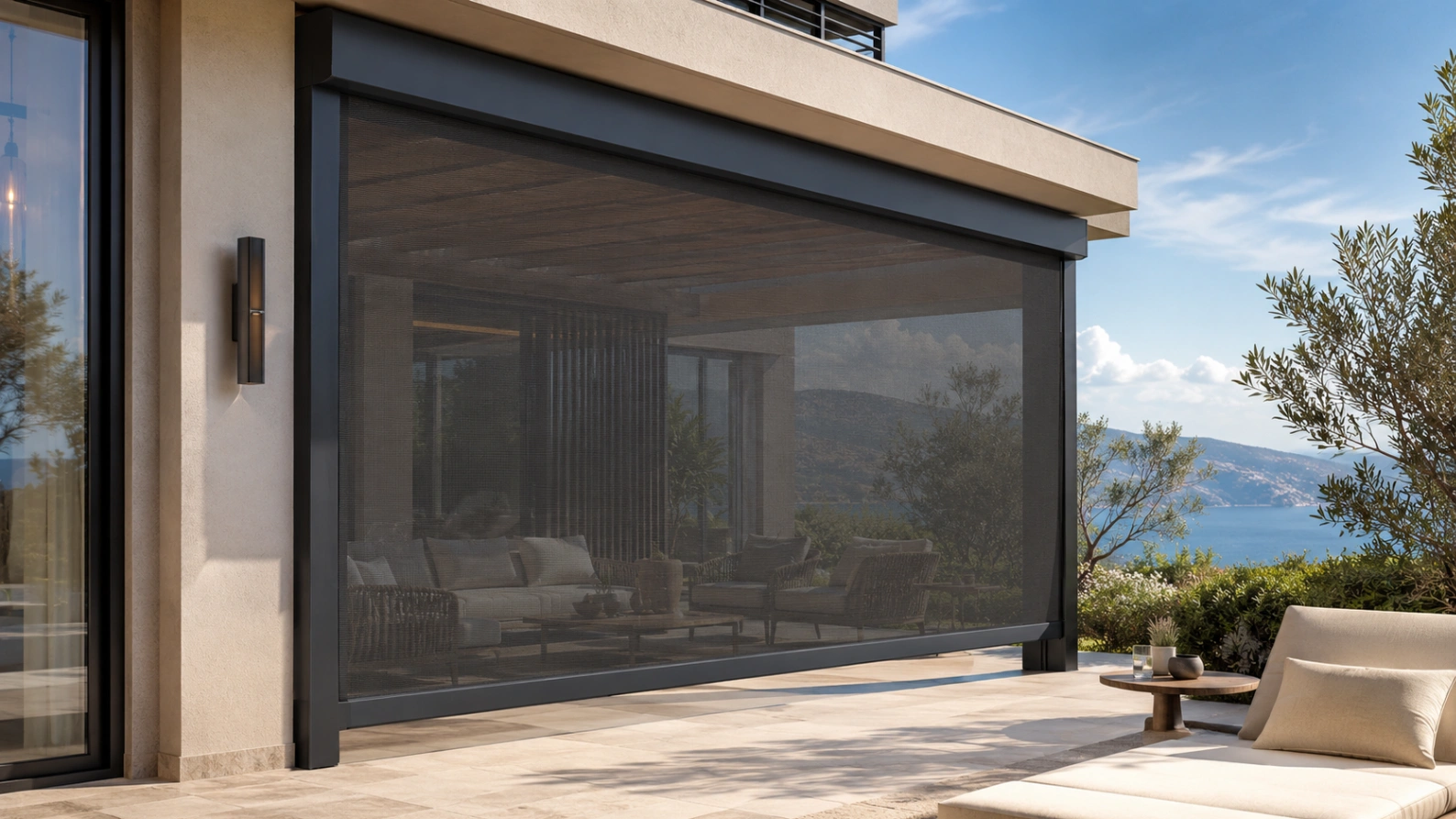
Wind-Resistant Zip Screen Systems for Terraces, Pergolas and Outdoor Living Spaces
Wind-resistant zip screen systems provide stable shading, privacy and outdoor comfort for terraces, pergolas, verandas, winter gardens and glass façades. With zip-guided side channels and durable technical fabrics, they help protect outdoor living spaces from sun, wind and changing weather conditions.
Wind-Resistant Zip Screen Systems for Terraces, Pergolas and Outdoor Living Spaces
Outdoor living spaces are becoming an important part of modern architecture. Terraces, pergolas, verandas, winter gardens and large glass façades are no longer used only in summer. Homeowners, hotels, restaurants and commercial projects want these areas to remain comfortable for longer periods throughout the year.
However, outdoor spaces are exposed to changing weather conditions. Sunlight, glare, heat, wind and privacy needs can quickly affect comfort. This is why wind-resistant zip screen systems have become one of the most effective solutions for modern outdoor shading projects.
What Is a Wind-Resistant Zip Screen?
A wind-resistant zip screen is a vertical shading system designed with side guide channels that keep the fabric aligned along the edges. Unlike standard outdoor blinds or loose curtain systems, the fabric does not hang freely. It moves inside guided side channels, helping the system remain more stable during windy conditions.
This zip-guided structure improves fabric tension, reduces side gaps and creates a cleaner, more controlled shading surface. The result is a modern outdoor screen system that combines sun protection, privacy and wind comfort in one solution.
Why Wind Resistance Matters in Outdoor Shading
Terraces, pergolas and balconies are often exposed to open-air conditions. Even a beautiful outdoor area can become uncomfortable when wind causes fabric movement, noise or instability. For residential users, this affects daily comfort. For hotels, restaurants and cafés, it can directly affect guest experience and outdoor seating usability.
Wind-resistant zip screens help create a more stable outdoor environment. They are especially useful for wide openings, pergola sides, terrace façades and outdoor seating areas where standard shading systems may not feel secure enough.
Sun Protection, Privacy and Outdoor Comfort
Wind-resistant zip screens are not only about wind control. They also help reduce direct sunlight, glare and heat exposure. Depending on the selected fabric, they can improve privacy while still allowing the space to feel connected to the outdoor environment.
For terraces and pergolas, this means more comfortable seating during sunny hours. For balconies and verandas, it helps create a more private and usable outdoor living zone. For commercial spaces, it supports a more premium and controlled customer experience.
Where Can Wind-Resistant Zip Screens Be Used?
- Terraces
- Pergolas
- Verandas
- Winter gardens
- Balconies
- Garden seating areas
- Restaurant and café outdoor areas
- Hotel terraces and lounge spaces
- Large glass façades
- Commercial outdoor shading projects
Benefits for Homeowners
For homeowners, wind-resistant zip screens make outdoor areas more comfortable and easier to use. A terrace, pergola or balcony can become a more functional living space when sunlight, glare, privacy and wind exposure are better controlled.
The side-guided fabric structure helps the system look clean and architectural. Instead of a loose outdoor curtain appearance, zip screens create a modern surface that integrates well with villas, apartments, garden-level homes and contemporary façades.
Benefits for Hotels, Restaurants and Cafes
For hospitality spaces, outdoor comfort has direct business value. Terraces, pergolas and outdoor seating areas can increase usable capacity, but only if guests feel comfortable. Wind-resistant zip screens can help protect seating areas from sun, glare and moderate wind exposure while improving privacy.
This makes them suitable for restaurants, cafés, hotels, poolside lounges, rooftop terraces and garden dining areas where comfort, appearance and durability are all important.
Benefits for Dealers, Installers and Project Companies
For B2B partners, wind-resistant zip screens are a strong product category because they answer a real project need: stable outdoor shading. Dealers, installers, architects and project companies can offer them as a premium solution for residential, hospitality and commercial applications.
For companies comparing outdoor shading solutions, Sineset zip screen systems provide adaptable options for terraces, pergolas, balconies, façades and project-based applications.
Wind-Resistant Zip Screen vs Standard Outdoor Blind
| Feature | Wind-Resistant Zip Screen | Standard Outdoor Blind |
|---|---|---|
| Fabric guidance | Fabric moves inside side guide channels | Fabric may move more freely depending on design |
| Wind comfort | More stable in outdoor conditions | Can be more affected by wind |
| Side gaps | Reduced thanks to zip-guided structure | More visible gaps may occur |
| Appearance | Clean, modern and architectural | Depends on system type and installation |
| B2B project value | Strong for premium outdoor and commercial projects | More suitable for basic shading needs |
How to Choose the Right Wind-Resistant Zip Screen
Before choosing a wind-resistant zip screen, the application area should be evaluated carefully. Opening size, wind exposure, mounting surface, fabric type, motor preference and project usage all affect the final system performance.
- For terraces: Prioritize sun control, privacy and stable fabric movement.
- For pergolas: Check side fixing points, wind exposure and fabric selection.
- For balconies: Choose a system that balances privacy, daylight and outdoor comfort.
- For restaurants and hotels: Focus on durability, frequent use and guest comfort.
- For B2B projects: Review measurement flexibility, production support and system compatibility.
If you need help selecting the right zip screen system for your project, you can use the measure and order support page to share your application details and receive guidance.
Fabric Choice for Wind-Resistant Zip Screens
Fabric selection is one of the most important parts of a zip screen project. Screen fabrics can provide sun control while preserving outward visibility. Blackout fabrics offer stronger privacy and light blocking. Sun-control fabrics can help reduce glare and heat gain in areas exposed to strong sunlight.
The correct fabric should match the location, sun direction, privacy need and visual expectation of the project. For a detailed guide, you can also review related fabric selection topics through Sineset zip screen solutions.
Frequently Asked Questions
What is a wind-resistant zip screen?
A wind-resistant zip screen is a vertical outdoor shading system where the fabric moves inside side guide channels. This structure helps improve fabric stability and reduce side gaps during outdoor use.
Can zip screens be used on pergolas?
Yes. Zip screens are suitable for pergola side openings when the structure, measurements and installation details are compatible with the system.
Are wind-resistant zip screens suitable for terraces?
Yes. They are suitable for terraces because they help improve sun protection, privacy and comfort while offering a more stable fabric movement than many standard outdoor blind systems.
Do zip screens provide privacy?
Yes. Depending on the selected fabric, zip screens can improve privacy while still maintaining different levels of outward visibility.
Are wind-resistant zip screens suitable for B2B projects?
Yes. They are suitable for dealers, installers, architects and project companies working on residential, hospitality and commercial outdoor shading applications.
Final Recommendation
Wind-resistant zip screen systems are a strong choice for terraces, pergolas and outdoor living spaces where sun protection, privacy and stability matter. Their side-guided structure makes them more controlled and architectural compared to many standard outdoor shading options.
To compare suitable outdoor shading solutions for your home or project, explore Sineset zip screen systems or contact Sineset for project-based support.
