


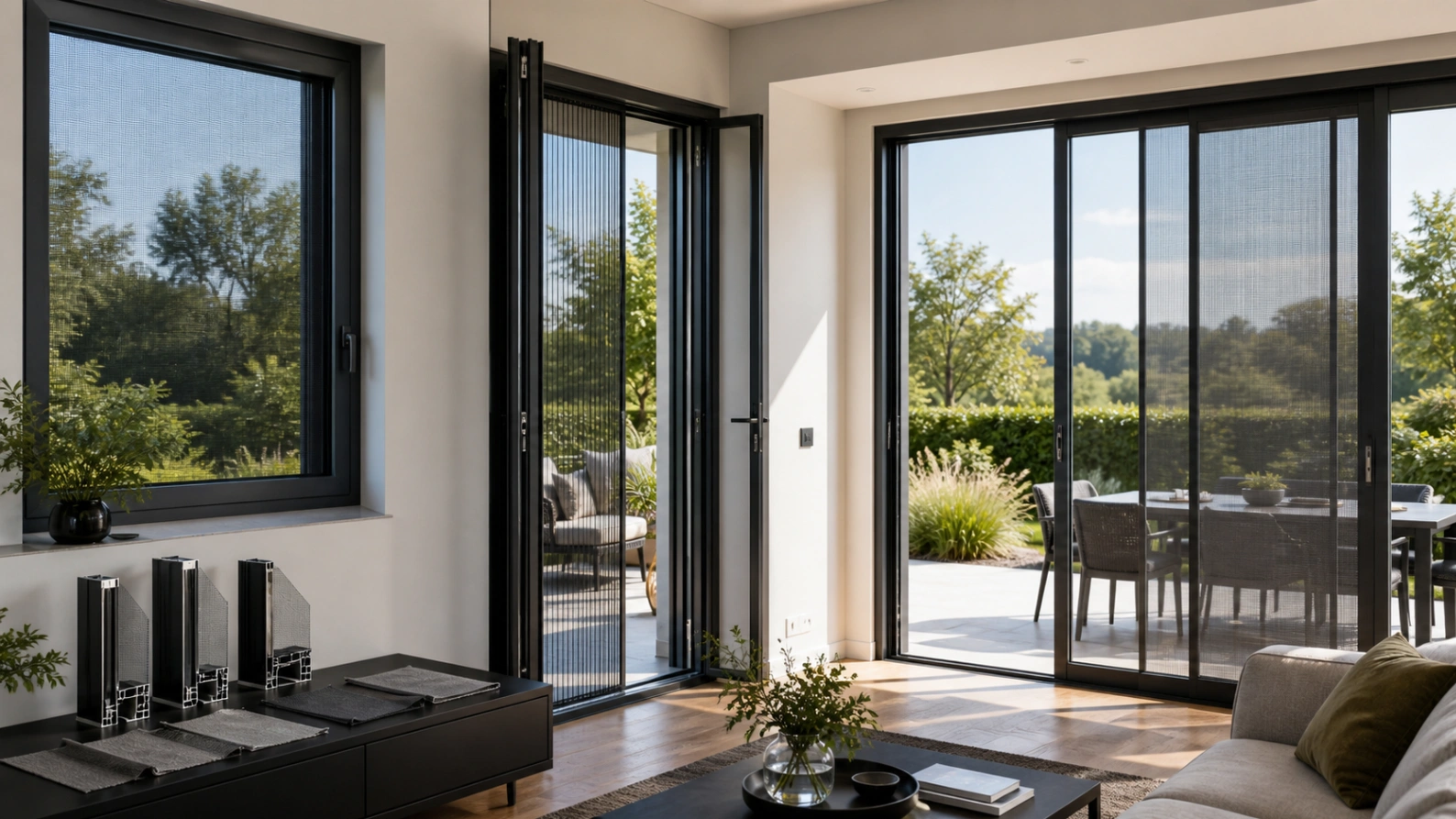
How to Choose the Right Fly Screen System for Windows and Doors
Learn how to choose the right fly screen system for windows, balcony doors, terrace doors, sliding doors, and pet-friendly homes.
How to Choose the Right Fly Screen System for Windows and Doors
Choosing the right fly screen system is not only about keeping insects outside. The right system should match the opening type, daily usage habits, architectural design, available mounting space and long-term comfort expectations of the project.
Windows, balcony doors, terrace doors, sliding doors, French doors, garden exits and pet-friendly homes may all require different fly screen solutions. Understanding these differences helps homeowners, dealers, installers and project companies make better decisions for both residential and commercial applications.
Start with the Opening Type
The first step is to identify where the fly screen will be used. A small window, a wide sliding door, a balcony entrance and a garden-facing terrace door do not have the same requirements. Each opening type needs a system that supports its daily function.
For standard windows, fixed or hinged fly screens may be suitable. For frequently used balcony and terrace doors, pleated fly screens usually provide better daily comfort because they can open and close smoothly without taking up extra space.
To compare different options for windows, doors and modern living spaces, you can explore Sineset flyscreen systems and review suitable solutions for your application.
Consider Daily Usage Frequency
Usage frequency is one of the most important factors when selecting a fly screen. A window that is opened only for ventilation does not need the same system as a balcony door that is used many times throughout the day.
For high-traffic areas, the screen should move easily, feel stable and support comfortable passage. For low-access windows, a simpler fixed solution may be enough. Choosing the system according to daily use helps improve both comfort and product lifespan.
Check the Frame Type and Mounting Space
Frame type has a direct impact on product selection. PVC, aluminum and wooden frames may require different installation details. Mounting depth, handle position, shutters, drip edges and available side space should all be reviewed before choosing a system.
Narrow PVC frames usually require compact systems with slim profiles. Larger openings may require stronger structures or project-specific solutions. The best system is the one that fits the frame without blocking the window or door function.
Choose the Right System for Each Application
| Application | Recommended System Type | Why It Works |
|---|---|---|
| Standard windows | Fixed or hinged fly screen | Simple insect protection for ventilation areas |
| Balcony doors | Pleated fly screen | Easy opening, space saving and smooth daily use |
| Terrace doors | Pleated or sliding fly screen | Suitable for frequent passage and larger openings |
| Narrow PVC frames | Slim-profile fly screen | Compact structure for limited mounting space |
| Pet-friendly homes | Pet mesh fly screen | Stronger mesh option for homes with cats and dogs |
Fresh Air, Natural Light and Insect Protection
A well-selected fly screen should allow the home to breathe naturally. It should support airflow and daylight while helping prevent mosquitoes, flies and insects from entering the room. This balance is especially important for modern homes where large windows and balcony doors are used frequently.
The goal is not to close the space, but to make it more comfortable. A good fly screen system should protect the interior while keeping the connection between indoor and outdoor areas open and practical.
Benefits for Homeowners
For homeowners, the right fly screen system means fresh air without insects, better daily comfort and a cleaner living experience. It also supports more flexible use of balconies, terraces, kitchens, bedrooms and garden-facing rooms.
Choosing the right system also prevents unnecessary frustration. A screen that is difficult to open, does not fit the frame or feels visually heavy can reduce user satisfaction. Matching the product to the real use case is the key.
Benefits for Dealers, Installers and Project Companies
For B2B partners, correct system selection creates better customer satisfaction and fewer installation issues. Dealers, installers, PVC window companies and project firms need solutions that can adapt to different frame types, measurements and user expectations.
For professional buyers and project-based cooperation, the Sineset B2B platform provides a dedicated path for dealers, distributors, installers and project companies looking for flyscreen, blind and zip screen solutions.
Think About Pets, Children and Accessibility
Homes with pets, children or elderly users may need extra consideration. Pet-friendly homes can benefit from stronger mesh options. Families with children may prefer systems that move smoothly and do not create unnecessary obstacles around balcony or terrace doors.
For frequently used passages, low-threshold or barrier-friendly details can also improve daily comfort. The right fly screen should not only protect the home from insects; it should also support the way people move through the space.
How to Make the Final Decision
Before choosing a fly screen, review the opening type, frame structure, mounting gap, usage frequency, mesh requirement and design expectations. If the project includes multiple openings, each one should be evaluated separately.
- For simple windows: Choose a practical fixed or hinged solution.
- For balcony doors: Prioritize easy passage and smooth movement.
- For narrow PVC frames: Use compact and slim-profile systems.
- For pet-friendly homes: Consider stronger mesh options.
- For B2B projects: Check measurement flexibility, production support and system compatibility.
If you are not sure which system fits your window or door, you can use the measure and order support page to share your application details and receive guidance.
Frequently Asked Questions
Which fly screen system is best for windows?
For standard windows, fixed or hinged fly screens can be suitable. The best choice depends on the frame type, opening size and whether access through the window is needed.
Which fly screen is best for balcony doors?
Pleated fly screens are usually one of the most practical options for balcony doors because they open and close smoothly while saving space around the passage.
Can fly screens be used on sliding doors?
Yes. Sliding doors can use suitable sliding or pleated fly screen systems depending on the frame structure, opening size and available mounting space.
Which fly screen is better for homes with cats and dogs?
Pet mesh fly screens can be a stronger option for homes with cats and dogs. They help provide insect protection while offering better resistance to daily pet contact.
Are fly screen systems suitable for B2B projects?
Yes. Fly screen systems are suitable for dealers, installers, PVC window companies, architects and project firms working on residential, hospitality and commercial projects.
Final Recommendation
The best fly screen system is the one that fits the opening, frame structure and daily use of the space. A balcony door, a standard window, a sliding door and a pet-friendly home may all need different solutions.
To compare suitable systems for your home or project, explore Sineset flyscreen systems or contact Sineset for project-based support.
