


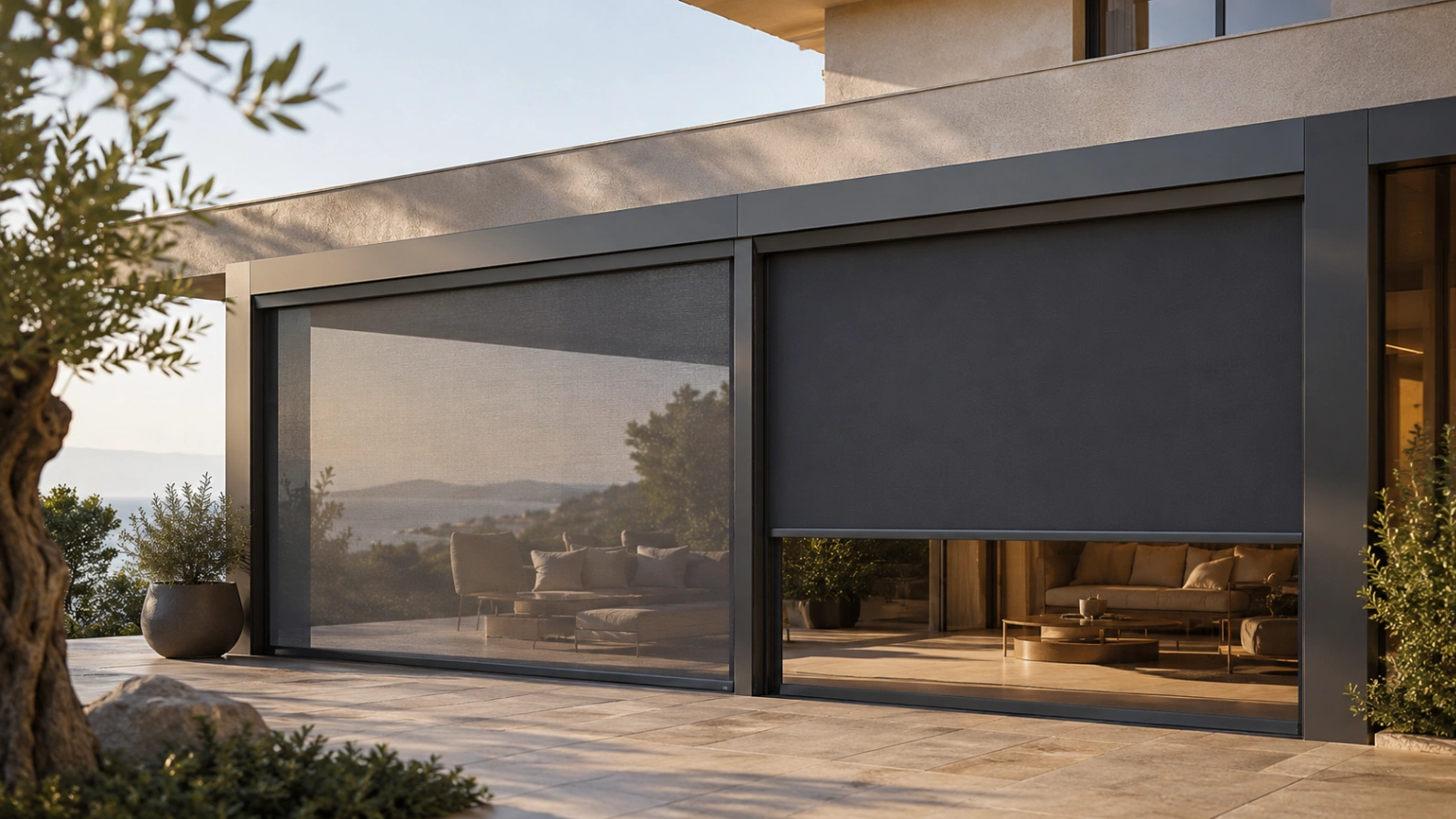
How to Choose the Right Fabric for Zip Screen Systems
Choosing the right fabric is one of the most important decisions in a zip screen system. Screen, blackout and sun-control fabrics offer different levels of privacy, heat control, glare reduction and outdoor comfort for balconies, terraces, pergolas and glass façades.
How to Choose the Right Fabric for Zip Screen Systems
A zip screen system is not only an outdoor shading product. It is a complete comfort solution that affects sunlight, privacy, temperature, wind protection and the overall atmosphere of a space. While the motor, aluminum structure and installation quality are extremely important, the fabric choice is what defines how the system feels in daily use.
Choosing the right zip screen fabric depends on the location, sun direction, privacy need, desired visibility and project type. A terrace facing strong afternoon sun may need a different fabric than a restaurant veranda, a winter garden or a residential balcony. This is why fabric selection should be made according to real usage conditions, not only color or appearance.
Why Fabric Selection Matters in Zip Screen Systems
The fabric is the largest visible surface of a zip screen. It controls how much light enters the space, how much heat is reduced and how private the area feels. It also affects the architectural appearance of the façade or outdoor living area.
A correct fabric choice improves comfort and visual quality at the same time. A wrong choice can make the space too dark, too transparent, too hot or visually disconnected from the building design. For balconies, terraces, pergolas and glass façades, fabric selection should be treated as a key project decision.
Main Fabric Types for Zip Screens
Zip screen systems can be used with different technical fabric options depending on the project. The most common categories are screen fabrics, blackout fabrics and sun-control fabrics. Each fabric type has a different purpose and should be selected according to the needs of the space.
- Screen fabrics: Suitable for sun control, visibility and outdoor comfort.
- Blackout fabrics: Suitable for stronger light blocking and privacy.
- Sun-control fabrics: Designed to reduce glare, heat and direct sunlight.
- Technical outdoor fabrics: Suitable for pergolas, terraces, façades and commercial applications.
Screen Fabric for Visibility and Sun Control
Screen fabric is one of the most popular options for zip screen systems. It helps reduce direct sunlight and glare while maintaining a certain level of visibility toward the outside. This makes it ideal for balconies, terraces, pergolas, verandas and restaurant outdoor areas.
For users who want shade without feeling completely enclosed, screen fabric is usually a strong choice. It softens sunlight, supports privacy during the day and keeps the space visually connected to the outdoor environment.
Blackout Fabric for Stronger Privacy and Light Blocking
Blackout fabric is preferred when stronger privacy or light blocking is required. It can be useful for areas where the user wants a more enclosed feeling, stronger shade or higher visual privacy.
This fabric type may be suitable for certain pergola sides, private terraces, hotel areas, residential balconies or spaces where sunlight needs to be blocked more aggressively. However, blackout fabric also reduces outward visibility more than screen fabric, so the final choice should match the user’s expectations.
Sun-Control Fabric for Heat and Glare Reduction
Sun-control fabrics are designed to improve comfort in areas exposed to strong sunlight. They can help reduce glare and heat gain, making outdoor and semi-outdoor spaces more usable during bright hours.
These fabrics are especially valuable for large glass surfaces, west-facing terraces, pergolas, winter gardens, restaurants and commercial façades. The goal is not only to create shade, but to improve the comfort level of the space throughout the day.
Where Fabric Choice Makes the Biggest Difference
- Balconies exposed to afternoon sun
- Terraces and pergolas used for seating
- Restaurant and café outdoor areas
- Hotel terraces and lounge spaces
- Winter gardens and glass façades
- Villa outdoor living areas
- Commercial buildings and project applications
Benefits for Homeowners
For homeowners, the right zip screen fabric creates a more comfortable outdoor living experience. It can reduce harsh sunlight, improve privacy and make balconies, terraces and pergolas more usable during the day.
The best fabric depends on how the space is used. A family balcony may need privacy and soft light control. A pergola seating area may need stronger sun protection. A glass façade may need glare reduction and heat control. Matching the fabric to the lifestyle is the key.
Benefits for Dealers, Installers and Project Companies
For B2B partners, fabric selection is a strategic part of the sales and specification process. Dealers, installers, architects and project companies need to recommend the correct fabric according to location, dimensions, wind exposure, privacy expectations and visual design.
For companies comparing outdoor shading options, Sineset zip screen systems offer adaptable solutions for balconies, terraces, pergolas, façades and commercial projects.
Zip Screen Fabric Comparison
| Fabric Type | Best For | Main Advantage |
|---|---|---|
| Screen fabric | Balconies, terraces, pergolas and restaurants | Sun control with outward visibility |
| Blackout fabric | Private terraces, hotel areas and enclosed outdoor zones | Stronger privacy and light blocking |
| Sun-control fabric | Glass façades, winter gardens and west-facing areas | Heat and glare reduction |
| Technical outdoor fabric | Commercial and project-based applications | Durability and architectural performance |
How to Choose the Right Zip Screen Fabric
Before choosing a fabric, the project should be evaluated from multiple angles. Sun direction, visibility, privacy, heat control, façade color, fabric openness and usage purpose should all be considered together.
- For balconies: Choose fabric that balances privacy, airflow and daylight comfort.
- For terraces: Prioritize sun protection and outdoor usability.
- For pergolas: Consider wind exposure, fabric stability and privacy needs.
- For glass façades: Focus on heat control, glare reduction and architectural appearance.
- For B2B projects: Match fabric type with project specification, climate and usage intensity.
If you need help selecting the right system or fabric for your project, you can use the measure and order support page to share your application details and receive guidance.
Fabric Color and Architectural Appearance
Fabric color also affects the final result. Darker fabrics can create a stronger modern look and may improve outward visibility in some screen fabric types. Lighter fabrics can feel softer and brighter, but they may provide a different level of privacy and visual contrast.
For architectural projects, fabric color should be coordinated with the aluminum profiles, façade color, window frames and outdoor furniture. This creates a more premium and integrated finish.
Frequently Asked Questions
Which fabric is best for zip screens?
The best fabric depends on the project. Screen fabric is ideal for sun control and visibility, blackout fabric is better for stronger privacy, and sun-control fabric is suitable for heat and glare reduction.
Does screen fabric provide privacy?
Yes. Screen fabric can improve daytime privacy depending on fabric openness, color, lighting conditions and viewing direction.
Is blackout fabric suitable for zip screens?
Yes. Blackout fabric can be suitable when stronger light blocking and privacy are needed, but it also reduces outward visibility more than screen fabric.
Can zip screen fabric reduce heat?
Yes. The right technical fabric can help reduce direct sunlight, glare and heat gain, especially on balconies, terraces, pergolas and glass façades.
Is fabric selection important for B2B projects?
Yes. Fabric selection affects performance, comfort, privacy, visual quality and customer satisfaction in residential, hospitality and commercial projects.
Final Recommendation
The right zip screen fabric should be selected according to sun exposure, privacy expectations, visibility, heat control and project type. Screen fabric, blackout fabric and sun-control fabric each serve a different purpose.
To compare suitable outdoor shading solutions for your home or project, explore Sineset zip screen systems or contact Sineset for project-based support.
