


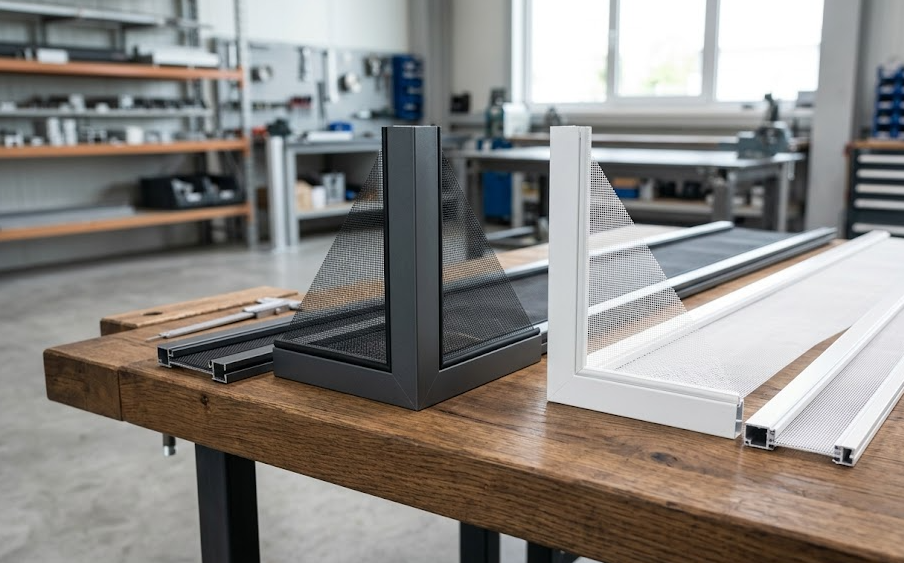
Fly Screen Profiles: Why Aluminium Profile Quality Matters
Learn why aluminium profile quality is important in fly screen systems and how it affects durability, appearance and long-term use.
Fly Screen Profiles: Why Aluminium Profile Quality Matters
A fly screen system is not only made of mesh. The aluminium profile is one of the most important parts of the product because it affects durability, appearance, system stability and long-term usability. Whether the system is fixed, pleated, sliding or project-based, profile quality directly influences the final performance.
For homeowners, dealers, installers, PVC window companies and project buyers, choosing a fly screen with the right aluminium profile can make a significant difference in daily use. A strong and well-designed profile helps the system fit better, work smoother and look more professional on the window or door frame.
What Is a Fly Screen Profile?
A fly screen profile is the aluminium frame or structural component that carries the mesh and supports the movement or installation of the system. Depending on the product type, the profile may function as a frame, guide, side profile, handle profile, bottom rail or cassette part.
The profile structure changes according to the fly screen system. Fixed fly screens, pleated fly screens, sliding fly screens and roll-up systems all require different profile designs because each system works in a different way.
Why Aluminium Is Used in Fly Screen Systems
Aluminium is widely preferred in fly screen systems because it is lightweight, durable and suitable for long-term use. It can provide a clean appearance while supporting the mechanical structure of the product.
A good aluminium profile should help the system stay stable, resist daily use and match the architectural style of the window or door frame.
Main Functions of Fly Screen Profiles
| Profile Function | Where It Is Used | Why It Matters |
|---|---|---|
| Frame profile | Fixed and window fly screens | Provides structure and clean installation |
| Side profile | Pleated fly screens | Supports the movement and collection of the mesh |
| Handle profile | Door and pleated systems | Improves daily opening and closing comfort |
| Guide profile | Sliding and moving systems | Helps the system move smoothly |
| Cassette profile | Roll-up and special systems | Protects and stores the mesh when not in use |
How Profile Quality Affects Durability
Profile quality affects how well a fly screen resists daily opening, closing, cleaning and seasonal use. A weak or poorly designed profile may cause bending, loose fitting, unstable movement or visual deformation over time.
A stronger aluminium profile supports the mesh more effectively and helps the product maintain its form during long-term use. This is especially important for balcony doors, wide openings, frequently used windows and project-based installations.
Profile Design and System Compatibility
Not every profile is suitable for every fly screen system. A fixed window screen requires a different profile structure than a pleated door screen. A sliding system needs movement compatibility, while a pleated system needs profiles that support the folded mesh and daily passage.
For this reason, product selection should not be based only on price or appearance. The profile must be compatible with the system type, opening size and usage frequency.
Why Profile Thickness and Geometry Matter
The thickness and geometry of the aluminium profile can affect product stability, installation quality and long-term performance. A well-designed profile should support the mesh, connect properly with accessories and remain stable on the window or door frame.
Profile geometry is also important for practical details such as corner connections, handle use, bottom rail comfort, side guidance and overall visual balance.
Profile Color and Architectural Appearance
Fly screen profiles should visually match the window, door or facade where they are installed. White, anthracite, wood-effect and special color options can help the fly screen look integrated with the existing frame.
For modern homes and projects, the profile should not look like an added temporary product. A clean profile design helps the fly screen become part of the architectural detail.
Why Profile Quality Is Important for B2B Buyers
For dealers, PVC window companies, installers and project buyers, profile quality is not only a technical detail. It also affects customer satisfaction, installation speed, repeat orders and after-sales reliability.
A well-designed fly screen profile can reduce installation problems, improve product consistency and support professional supply operations.
Related Sineset Solutions
Sineset offers flyscreen systems designed for different window, door and project applications. You can review the full product range and choose the system according to the opening type and usage need.
- Explore all Sineset flyscreen systems
- Sineset B2B solutions for dealers and professional buyers
- Contact Sineset for product and project support
What Should You Check When Choosing a Fly Screen Profile?
- System compatibility: The profile should match the fly screen model and opening type.
- Profile stability: The structure should support long-term use without deformation.
- Accessory compatibility: Corners, handles, guides and connection parts should work properly with the profile.
- Color options: The profile color should match the architectural frame.
- Production quality: Consistent manufacturing improves installation and product reliability.
Frequently Asked Questions
What is a fly screen profile?
A fly screen profile is the aluminium structural part that carries the mesh and supports the installation or movement of the fly screen system.
Why is aluminium used in fly screen profiles?
Aluminium is preferred because it is lightweight, durable, clean-looking and suitable for different fly screen systems.
Does profile quality affect fly screen performance?
Yes. Profile quality affects durability, appearance, system stability, movement comfort and long-term usability.
Are all fly screen profiles the same?
No. Fixed, pleated, sliding and roll-up fly screens require different profile structures according to their working principle.
Why is profile quality important for dealers and installers?
Good profile quality supports easier installation, consistent product performance, customer satisfaction and professional supply operations.
Final Recommendation
When choosing a fly screen system, profile quality should be considered as carefully as mesh type and measurement. A well-designed aluminium profile improves product durability, appearance and long-term comfort.
To explore suitable systems for windows, doors and project-based applications, visit Sineset flyscreen systems or contact Sineset for support.
