
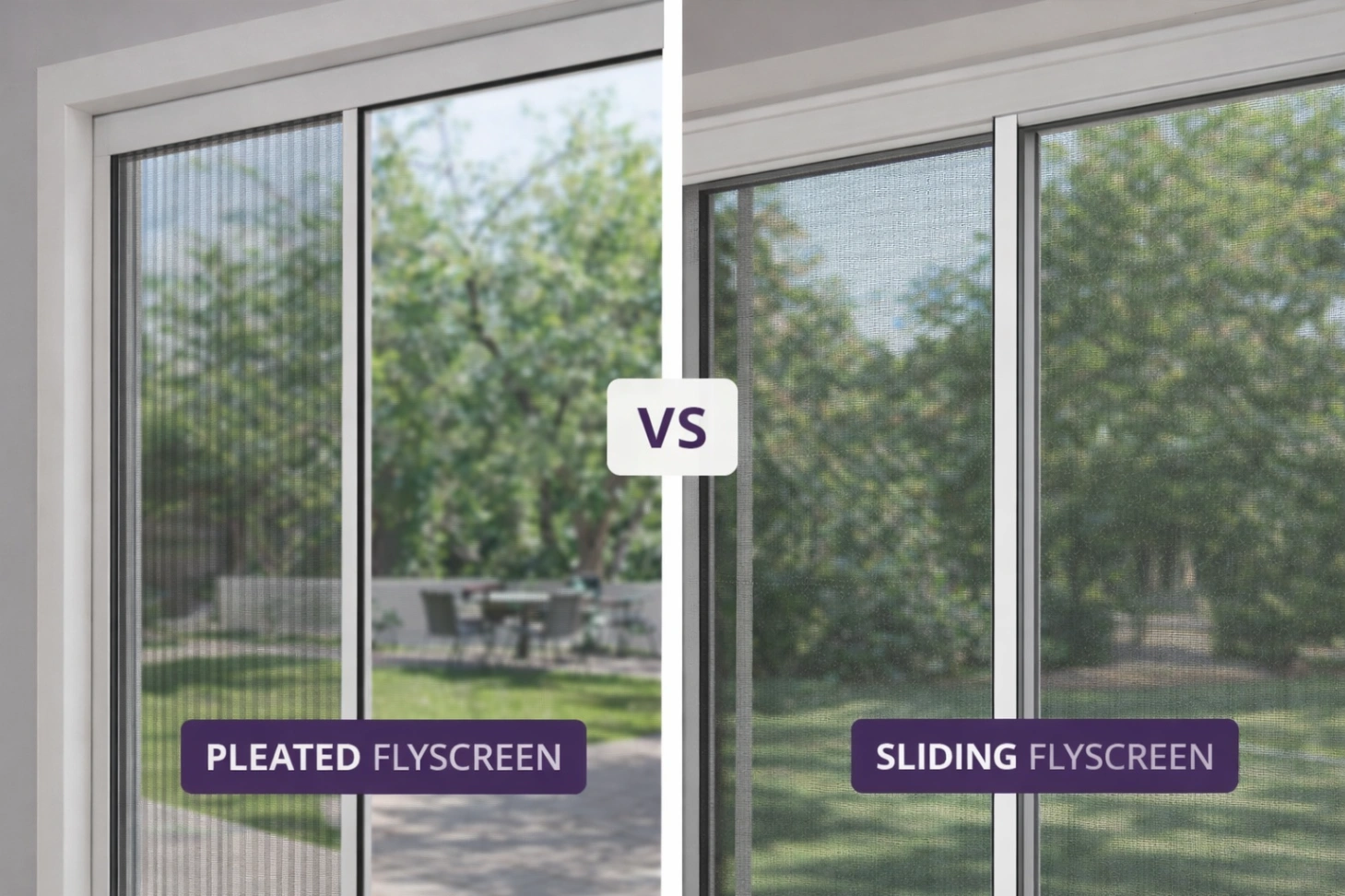
Pleated vs Sliding Flyscreen: Which One Is Better?
Pleated or sliding flyscreen? Compare space efficiency, durability, operation, cost, and best-use areas to choose the right system for your project.
Pleated vs Sliding Flyscreen: Which One Is Better?
This is one of the most common questions in the flyscreen industry. The honest answer is simple: neither system is universally better. Each one performs better in different situations, and the right choice depends on the opening type, traffic level, aesthetic expectation, and budget.
At Sineset, we manufacture both pleated and sliding flyscreen systems, so this comparison is not based on theory. It is based on real applications, real customer needs, and real production experience.
What Is a Pleated Flyscreen?
A pleated flyscreen uses accordion-folded mesh guided by tensioned cords inside an aluminum frame. It opens and closes manually with smooth, silent movement and folds into a very compact space when retracted.
Pleated systems are popular because they combine elegant appearance, flexibility, and efficient use of space. They are widely used for windows, balcony doors, single entrances, and even wide openings with center-opening configurations.
What Is a Sliding Flyscreen?
A sliding flyscreen uses flat mesh stretched over an aluminum frame. The panel moves horizontally on rails and is especially suitable for larger openings and areas with heavier daily traffic.
Sliding systems are appreciated for their robust structure, simple mechanism, and long-term durability. They are commonly preferred for patio doors, balcony doors, and larger residential or commercial openings.
Space Efficiency
Pleated flyscreens have a major advantage when space matters. When open, the mesh folds into a compact stack and takes up very little room. This makes the system visually lighter and less intrusive.
Sliding flyscreens need panel travel space. Because the panel remains full size, the system occupies more visible area when open compared to a pleated system.
If your priority is a cleaner and more discreet look, pleated systems usually win in this category.
Durability and Daily Use
Sliding flyscreens are often the stronger option for high-traffic openings. Their mechanism is simpler, and the rigid panel structure performs very well in areas where the screen is opened and closed frequently.
Pleated flyscreens are also highly durable when engineered correctly, especially when produced with quality accessories, stable cord routing, and properly folded mesh. However, in very heavy daily use zones, sliding systems may feel more robust over time.
Aesthetics and User Experience
Pleated systems are often preferred in modern residential projects because they look elegant, retract neatly, and operate without the harsh snap-back effect seen in some traditional systems. They also work especially well where a premium visual finish matters.
Sliding systems offer a clean and practical appearance, but they usually look more mechanical and more visible than pleated systems. In return, they deliver a straightforward and reliable user experience.
Accessibility
Pleated systems have a strong advantage here because they can be produced in barrier-free versions with very low thresholds. This is especially important in homes with elderly residents, wheelchair access, walkers, or strollers.
Sliding systems generally use more conventional threshold structures, so they are not usually the first choice when accessibility compliance is a major requirement.
Mesh Type and Ventilation
Pleated systems typically use pleated polyester mesh, while sliding systems commonly use flat fiberglass mesh. Both offer strong insect protection, but the feel and visual performance are different.
Sliding systems with flat fiberglass mesh are often preferred when customers want a more traditional screen surface and strong airflow. Pleated systems are usually chosen for their design advantage and compact retraction.
Cost Comparison
In many standard applications, sliding flyscreens can be more cost-effective because of their simpler construction. Pleated flyscreens usually sit in a medium price segment due to their folding mesh structure, accessories, and more refined engineering.
That said, cost should never be considered alone. A lower initial price does not always mean a better solution if the system does not match the opening correctly.
Which One Should You Choose?
Choose a pleated flyscreen if:
You want a more elegant appearance, compact retraction, quiet operation, and better flexibility for different opening types.
Choose a sliding flyscreen if:
You need a strong and practical system for larger or heavier-use openings where durability is the main priority.
Final Verdict
Pleated flyscreens are the more versatile and design-oriented choice. Sliding flyscreens are the more robust and work-focused choice. Neither one is automatically better than the other. The right decision depends on the project itself.
In many successful projects, both systems are used together. Pleated screens may be selected for windows and elegant access points, while sliding screens may be chosen for larger balcony or patio doors. That approach usually gives the best overall result.