


How to Maintain Pleated Flyscreens for Long-Lasting Performance
Pleated flyscreens are practical, elegant and durable when maintained correctly. This guide explains how to clean pleated mesh, protect aluminum profiles, care for bottom tracks and keep flyscreen systems working smoothly for years.
How to Maintain Pleated Flyscreens for Long-Lasting Performance
Pleated flyscreens are practical, elegant and durable when they are maintained correctly. They allow fresh air into the home while helping keep mosquitoes, flies and other insects outside. With their slim aluminum profiles and neatly folded mesh structure, they also support a modern appearance for windows, balcony doors and terrace openings.
Like every functional architectural product, pleated flyscreens perform best when they are cleaned and used properly. Regular maintenance helps keep the mesh, side profiles, bottom track and moving parts working smoothly for a longer time.
Why Pleated Flyscreen Maintenance Matters
Pleated flyscreens are used in areas exposed to dust, outdoor air, pollen, moisture and daily movement. Over time, small particles can collect on the mesh surface, inside the guide profiles or around the bottom track. If these areas are not cleaned, the system may feel less smooth during opening and closing.
Maintenance does not need to be complicated. In most homes, simple periodic cleaning is enough to keep the flyscreen looking clean and working properly. The key is to use gentle methods and avoid aggressive chemicals, hard brushes or excessive force.
Clean the Mesh Gently
The pleated mesh is one of the most important parts of the system. It should be cleaned carefully because the folded structure needs to keep its form for smooth movement.
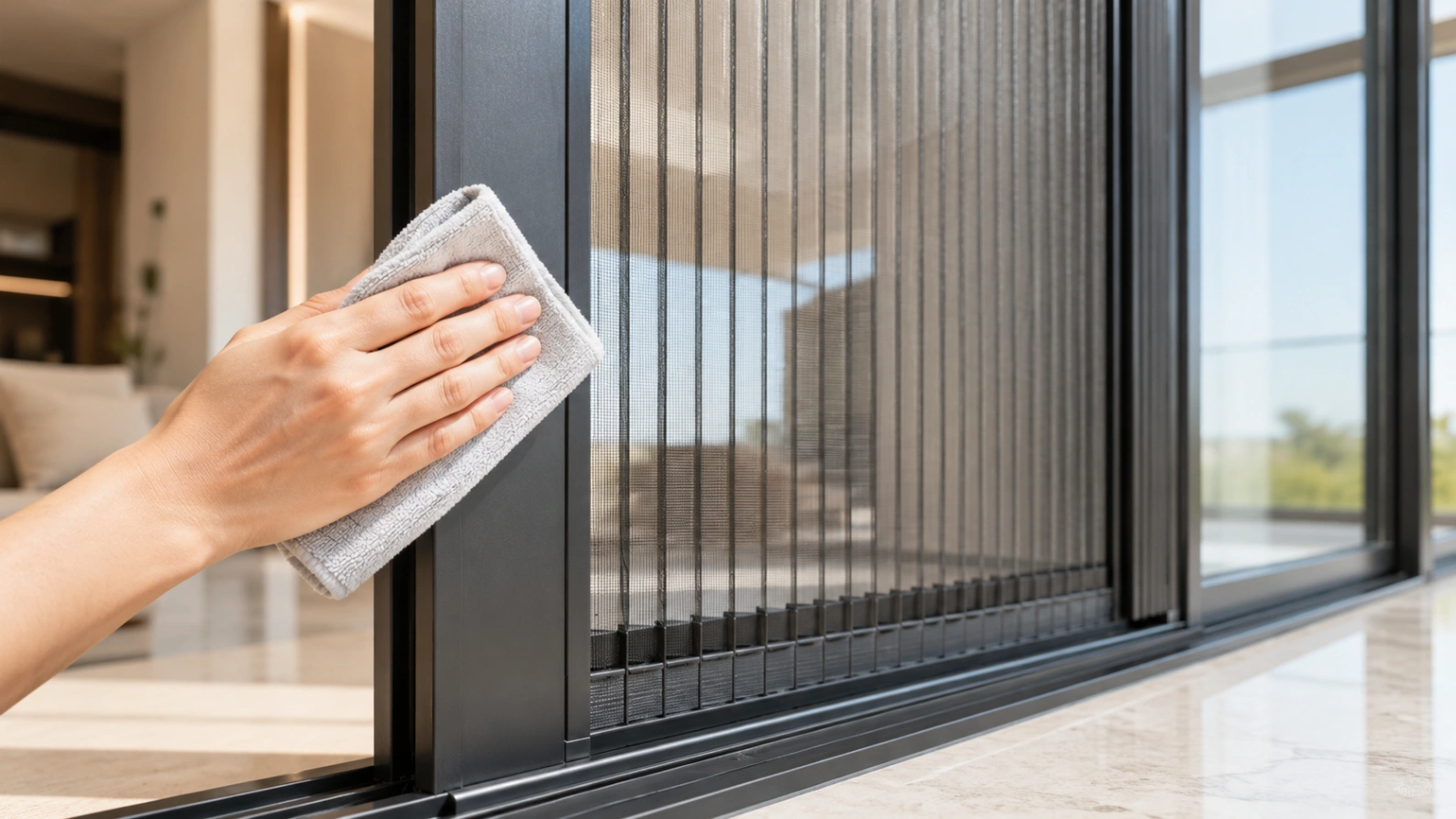
For regular cleaning, use a soft cloth, microfiber cloth or a soft brush to remove dust from the mesh surface. If needed, a slightly damp cloth can be used. Avoid pulling, stretching or pressing the mesh aggressively, because this can affect the pleated structure.
Keep the Bottom Track Free from Dust
The bottom track can collect dust, small stones, pet hair and outdoor particles, especially on balcony doors, terrace doors and garden exits. When the track becomes dirty, the flyscreen may not move as smoothly as it should.
Clean the bottom area regularly with a soft brush or vacuum cleaner using a gentle setting. Keeping this area clean helps the system move more comfortably and reduces unnecessary friction during daily use.
Check the Side Profiles
Side profiles guide the movement of the pleated mesh. Dust and dirt inside these profiles can affect the system’s performance over time. A simple visual check can help identify whether cleaning is needed.
Use a dry or slightly damp cloth to clean the visible profile surfaces. For narrow areas, a soft brush can help remove dust without damaging the profile or mesh. Do not use sharp tools inside the profiles.
Avoid Harsh Chemicals
Harsh chemicals, abrasive cleaning products and strong solvents can damage the mesh, plastic accessories or profile surface. For most cleaning needs, clean water and a soft cloth are enough.
If deeper cleaning is needed, use a mild cleaning approach and test carefully on a small area first. The safest method is always gentle cleaning with minimal pressure.
Use the System Smoothly
Pleated flyscreens are designed for practical daily use, but they should still be operated with care. Pull the handle profile smoothly and avoid sudden, aggressive movement. If the system feels blocked, do not force it. Check the bottom track and side profiles for dirt or obstacles.
Smooth operation helps protect the mesh, cord structure, profiles and accessories. This is especially important for frequently used balcony doors, terrace doors and garden exits.
Where Maintenance Is Especially Important
- Balcony doors used many times during the day
- Terrace doors exposed to outdoor dust
- Garden-facing openings
- Homes with pets
- Coastal areas with wind and humidity
- Homes near gardens, trees or pollen-heavy areas
- Hotels, serviced apartments and rental properties
- Commercial and project-based applications
Benefits for Homeowners
For homeowners, regular maintenance helps the flyscreen stay cleaner, smoother and more comfortable to use. A clean mesh supports better airflow, while clean profiles and tracks help the system open and close more easily.
This makes daily use more pleasant and can help extend the usable life of the system. Maintenance is especially useful before and after the summer season, when flyscreens are used more frequently.
Benefits for Dealers, Installers and Project Companies
For B2B partners, explaining maintenance clearly improves customer satisfaction after installation. Dealers, installers, PVC window companies and project firms can reduce service questions by giving users simple care instructions.
For companies comparing different insect screen systems, Sineset flyscreen systems offer practical solutions for windows, doors, balcony applications and modern residential projects.
Pleated Flyscreen Maintenance Guide
| Area | Recommended Care | What to Avoid |
|---|---|---|
| Pleated mesh | Clean gently with a soft cloth or soft brush | Hard brushing, pulling or strong pressure |
| Bottom track | Remove dust, stones and debris regularly | Letting dirt build up inside the track |
| Side profiles | Wipe visible surfaces and clean dust carefully | Sharp tools or abrasive materials |
| Handle profile | Use smooth and controlled movement | Fast pulling or forcing the system |
| Accessories | Check visually during seasonal cleaning | Using harsh chemicals or solvents |
Seasonal Maintenance Tips
Before the summer season, check the flyscreen for dust, track build-up and smooth movement. This helps prepare the system for frequent use during warmer months. After the season, clean the mesh and profiles again to remove dust, pollen and outdoor particles.
- Before summer: Clean the mesh, bottom track and side profiles.
- During summer: Remove visible dust and track debris regularly.
- After summer: Clean pollen, dust and outdoor particles before long-term lower use.
- For pet-friendly homes: Check for pet hair or mesh contact more often.
- For B2B projects: Provide users with simple maintenance instructions after installation.
If you need support choosing or replacing a flyscreen system for your window or door, you can use the measure and order support page to share your application details and receive guidance.
Frequently Asked Questions
How often should pleated flyscreens be cleaned?
In normal home use, periodic cleaning every few weeks during heavy-use seasons is usually helpful. Homes near gardens, coastal areas or dusty environments may need more frequent cleaning.
Can pleated flyscreen mesh be washed?
The mesh should be cleaned gently according to the product structure. A soft cloth or soft brush is usually safer than aggressive washing. Avoid strong pressure, harsh chemicals and pulling the mesh.
Why does my pleated flyscreen feel harder to move?
Dust, debris or small particles in the bottom track or side profiles can affect movement. Clean the track and profiles gently before forcing the system.
Can I use chemicals to clean a pleated flyscreen?
Harsh chemicals and solvents should be avoided. Clean water, a soft cloth and gentle cleaning methods are usually enough for regular maintenance.
Is maintenance important for B2B projects?
Yes. Clear maintenance guidance helps hotels, apartments, residential projects, dealers and installers improve user satisfaction and reduce unnecessary service issues.
Final Recommendation
Pleated flyscreen maintenance is simple but important. Gentle cleaning of the mesh, regular track care and smooth daily operation help keep the system comfortable, clean and long-lasting.
To compare suitable insect screen systems for your home or project, explore Sineset flyscreen systems or contact Sineset for project-based support.
